
ABA Therapy in 2025: How Applied Behavior Analysis Transforms Lives
In 2025, aba analysis behavior continues to stand out as a leading approach in behavioral science and autism support. As families and professionals search for effective solutions, understanding the foundations of ABA therapy is more important than ever.
This guide explores what makes ABA unique, from its scientific origins to its modern, evidence-based practices. You’ll learn how aba analysis behavior is transforming lives, why it’s trusted by experts, and how to access quality services.
Ready to discover how ABA empowers individuals, families, and professionals? Use this guide to make informed decisions about ABA therapy in 2025.
WHAT IS ABA? DEFINING APPLIED BEHAVIOR ANALYSIS IN 2025
When you hear the term aba analysis behavior, think of it as a scientific method for understanding and improving human actions. In 2025, ABA remains at the forefront of behavioral science, offering proven strategies that help individuals reach their full potential.

At its core, aba analysis behavior emphasizes the connection between human actions, the environment, and the way we learn. Every behavior—whether it’s a child asking for help or a teenager completing homework—occurs in response to surrounding conditions. ABA professionals carefully observe these interactions, using data-driven methods and evidence-based strategies to guide positive change.
DUAL PURPOSE: BUILDING SKILLS AND REDUCING CHALLENGES
What makes aba analysis behavior unique is its dual focus: strengthening useful skills while reducing behaviors that may be harmful or disruptive. For instance, a child struggling with communication may learn to use words or gestures instead of acting out. This science-backed approach is not only about minimizing unwanted behaviors but also about fostering confidence and new abilities.
RISING DEMAND AND POPULARITY OF ABA
ABA therapy has seen significant growth in recent years. Industry reports highlight increasing demand for aba analysis behavior across schools, clinics, and homes. Today, thousands of families and professionals rely on ABA to support learning, independence, and emotional well-being.
FLEXIBILITY AND PERSONALIZATION OF ABA PROGRAMS
ABA is not a one-size-fits-all solution. Its greatest strength lies in flexibility. Each program is customized to meet individual needs—whether it’s a preschooler with autism, a teenager facing social challenges, or an adult working on workplace skills. ABA therapy can be delivered at home, in classrooms, clinics, or within community settings, ensuring support is available wherever it’s needed most.
ABA IMPACT AREAS IN 2025
| Setting | Common Goals | Who Benefits |
|---|---|---|
| Home | Daily routines, communication | Children, families |
| School | Social skills, academics | Students, teachers |
| Clinic | Intensive intervention, peer play | All ages, various diagnoses |
| Community | Independence, public behavior | Teens, adults, families |
A primary application of aba analysis behavior is in autism support. For decades, ABA therapy has helped children with autism build essential communication and social skills. Imagine a young child who, after months of personalized ABA sessions, begins to express needs with words instead of frustration—these breakthroughs are life-changing for families.
But the influence of aba analysis behavior extends beyond autism. ABA is also effective for individuals with developmental disabilities, ADHD, and other behavioral challenges. Its evidence-based design ensures that interventions are rooted in research, continually tested, and refined for lasting impact.
ABA AS THE GOLD STANDARD IN BEHAVIORAL INTERVENTION
The roots of aba analysis behavior trace back to the 1960s. Over decades of research and practice, its methods have been refined into what is now recognized as the gold standard for behavioral intervention. Recent studies, including meta-analyses of ABA programs, highlight significant improvements in communication, adaptive skills, and cognitive development for children on the autism spectrum.
ABA IN 2025: A SCIENTIFIC MOVEMENT CHANGING LIVES
In summary, aba analysis behavior is more than a therapy—it’s a scientific movement reshaping lives in 2025. By combining personalized strategies, data-driven decision-making, and a proven history of success, ABA continues to empower individuals, families, and communities worldwide.
THE EVOLUTION OF ABA: FROM EARLY BEGINNINGS TO 2025
The story of aba analysis behavior is one of continuous progress, innovation, and adaptation. To fully appreciate its impact in 2025, it’s important to look back at its origins and recognize how far the field has advanced.
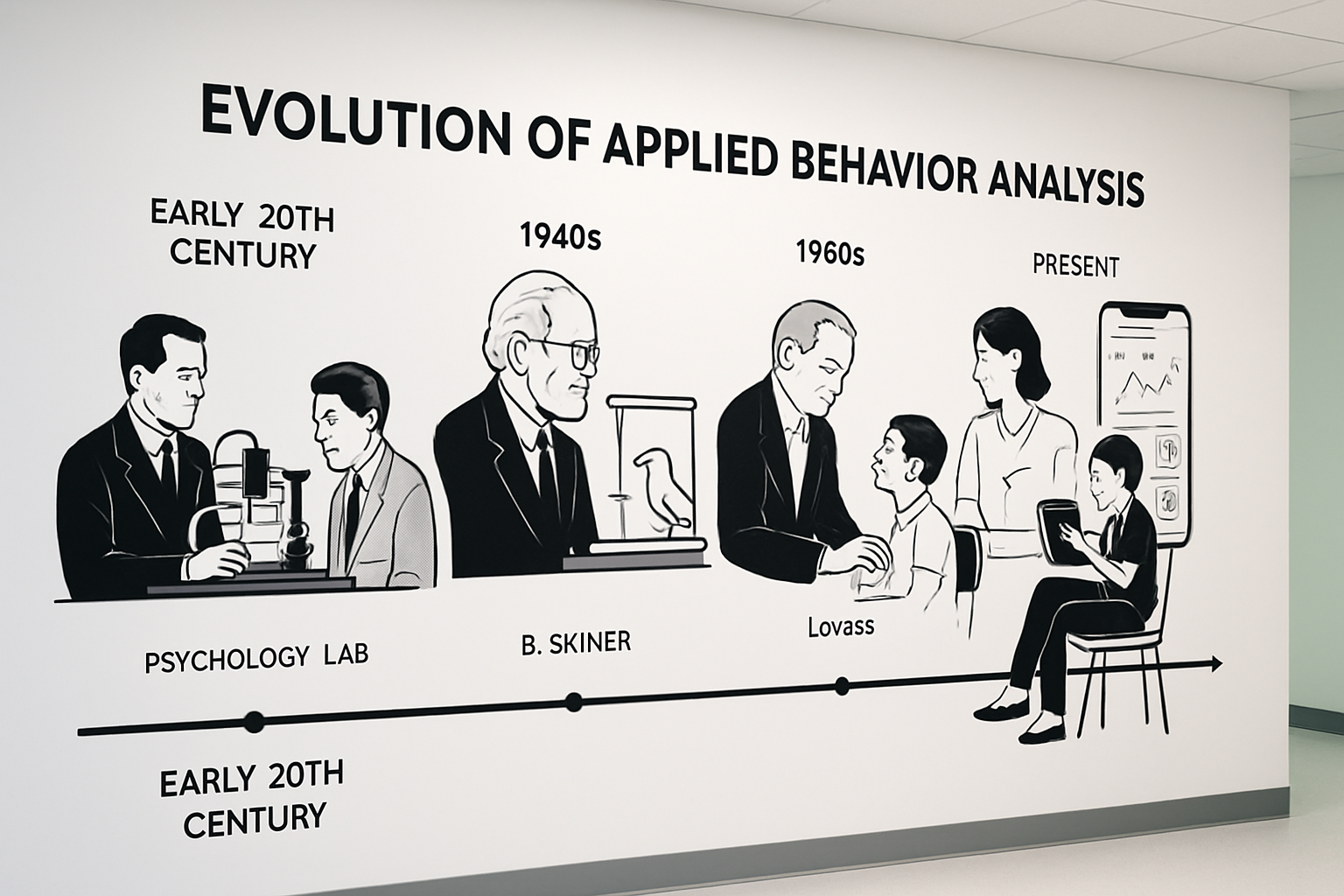
THE HISTORY AND PIONEERS OF ABA
Aba analysis behavior traces its foundation back to the early 20th century. John B. Watson, often recognized as the father of behaviorism, emphasized that psychology should focus on observable actions rather than internal thoughts. This shift laid the groundwork for a more scientific study of human behavior.
B.F. Skinner advanced this approach with his work on operant conditioning. He introduced the ABC model—antecedent, behavior, consequence—a framework that remains central to aba analysis behavior today.
In the 1960s, Dr. Ivar Lovaas pioneered the application of ABA with autistic children. His research demonstrated that targeted interventions could lead to significant improvements in language and social skills. Another milestone came in 1968 with the launch of the Journal of Applied Behavior Analysis (JABA) by Baer, Wolf, and Risley, which helped spread knowledge and establish rigorous standards.
ABA quickly expanded beyond autism, finding applications in schools, juvenile justice systems, and businesses. Early interventions, such as teaching children communication through step-by-step prompts, showcased the versatility of aba analysis behavior. Foundational research during these decades solidified ABA’s evidence-based reputation, a status it continues to hold in 2025.
RECENT ADVANCES AND INNOVATIONS IN ABA
The past decade has brought remarkable progress in aba analysis behavior. Technology now plays a central role, with data collection apps, telehealth platforms, and virtual ABA sessions enabling therapists to reach more individuals with greater precision.
Ethical practice and client-centered goals have become priorities. Today’s practitioners emphasize individual needs, cultural backgrounds, and informed consent. Parent and caregiver training is now a standard component of most ABA programs, empowering families to reinforce progress at home.
Standards from the Behavior Analyst Certification Board (BACB) have evolved to ensure quality and accountability. The COVID-19 pandemic accelerated the adoption of remote and virtual ABA, making therapy more accessible than ever. The number of Board Certified Behavior Analysts (BCBAs) has surged, reflecting growing demand and broader applications.
ABA’s adaptability is evident in its response to new research and societal needs. According to ABA market growth analysis, the field continues to expand rapidly, with projections showing increased adoption across diverse settings. This ongoing evolution ensures that aba analysis behavior remains relevant and effective for the challenges of 2025.
CORE PRINCIPLES OF ABA: HOW AND WHY IT WORKS
Understanding the core principles behind aba analysis behavior is essential for anyone seeking effective, evidence-based interventions. These principles explain not only how ABA works but also why it consistently delivers meaningful, measurable results for individuals and families.

The Four Functions of Behavior
At the heart of aba analysis behavior is the understanding that every action has a purpose. ABA identifies four main functions that drive behavior:
| Function | Description | Example |
|---|---|---|
| Escape/Avoidance | Avoiding tasks, situations, or discomfort | Child cries to avoid chores |
| Attention-Seeking | Gaining social interaction or acknowledgment | Student shouts to get teacher's attention |
| Access to Tangibles | Obtaining desired objects or activities | Teen negotiates for more screen time |
| Sensory Stimulation | Seeking internal satisfaction or comfort | Child rocks for self-soothing |
Recognizing these functions allows professionals to design tailored interventions. For example, if a child uses challenging behavior to avoid homework, the intervention focuses on teaching alternative, appropriate ways to communicate their needs. Research shows that escape/avoidance and attention-seeking are the most common functions in clinical aba analysis behavior cases.
Knowing the "why" behind a behavior ensures interventions are compassionate and effective. This function-based approach is a cornerstone of aba analysis behavior and helps prevent generic, one-size-fits-all solutions.
POSITIVE REINFORCEMENT AND THE ABCS OF BEHAVIOR
Positive reinforcement is a driving force behind lasting change in aba analysis behavior. The ABC model—Antecedent, Behavior, Consequence—guides how professionals assess and influence behavior patterns.
- Antecedent: What happens right before the behavior
- Behavior: The specific action taken
- Consequence: What happens immediately after, shaping the likelihood of the behavior recurring
For instance, if a child uses words to request a toy and receives praise or the toy itself, this positive consequence increases the chance they’ll use words again in the future. Reward systems, such as token boards or special privileges, are practical tools that make new skills more appealing.
It’s essential that rewards are meaningful and individualized. What motivates one child may not motivate another, and aba analysis behavior programs are designed to reflect these unique preferences. Studies on ABA effectiveness highlight how positive reinforcement improves emotional and social skills for children with autism.
By focusing on positive change rather than punishment, aba analysis behavior empowers individuals to build new skills and confidence.
DATA COLLECTION AND PROGRESS MONITORING
Data-driven decision making is a foundation of aba analysis behavior. Ongoing assessment ensures interventions are effective and allows for timely adjustments.
Professionals track frequency (how often a behavior occurs), duration (how long it lasts), and intensity (how severe it is). For example, monitoring the reduction of self-injurious behavior over weeks provides clear evidence of progress.
This commitment to accountability sets aba analysis behavior apart. Families and professionals can see real, measurable growth—making every step forward count.
ABA THERAPY IN ACTION: TECHNIQUES, PROGRAMS, AND SETTINGS
ABA therapy is known for its practical, hands-on approach to fostering meaningful change. To truly understand aba analysis behavior, it’s important to see how its core methods, program structures, and diverse settings come together to create individualized, effective interventions.

COMMON ABA TECHNIQUES AND INTERVENTIONS
Aba analysis behavior uses a toolkit of evidence-based strategies to teach new skills and reduce challenging behaviors. Some of the most widely applied methods include:
- Discrete Trial Training (DTT): Skills are broken into small, manageable steps, taught one at a time with clear instructions and immediate feedback.
- Natural Environment Teaching (NET): Learning occurs in real-world settings, making it easier to generalize new behaviors.
- Task Analysis: Complex skills are divided into simple actions, taught sequentially for mastery.
- Prompting and Fading: Support is provided as needed, then gradually reduced to encourage independence.
- Shaping: Successive approximations of a target behavior are reinforced, guiding learners toward the desired outcome.
For example, DTT is often used to build language skills in children with autism, ensuring each word or gesture is practiced and reinforced. The strength of aba analysis behavior lies in its flexibility—techniques are selected and adapted based on individual needs, strengths, and goals.
ABA PROGRAM STRUCTURE: ASSESSMENT, PLANNING, AND IMPLEMENTATION
Every effective aba analysis behavior program begins with a thorough assessment. This process evaluates the learner’s current skills, preferences, and family priorities. Data from interviews, observations, and standardized tests shape a personalized treatment plan. Goals are written to be clear, measurable, and meaningful. A Board Certified Behavior Analyst (BCBA) oversees program creation, breaking down each goal into manageable steps. Collaboration is key, with families, teachers, and related professionals contributing to ensure the plan fits daily life.
Implementation is dynamic. Therapists collect ongoing data to track progress and make adjustments as needed. For example, a teen with autism might follow a social skills curriculum designed with input from parents and teachers, with activities updated based on real-time feedback. This continuous cycle of assessment, planning, and implementation ensures aba analysis behavior remains responsive and effective for each individual.
WHERE ABA HAPPENS: HOME, CLINIC, SCHOOL, AND BEYOND
Aba analysis behavior is not limited to one setting. Its versatility allows it to be delivered wherever support is needed most:
- Home-based ABA: Parents actively reinforce skills through daily routines.
- Clinic-based services: Learners benefit from structured environments and peer interaction.
- School consultation: ABA integrates into IEPs and classroom strategies, supporting students and teachers.
- Community-based ABA: Skills are practiced in real-world settings like playgrounds or stores.
- Telehealth and remote ABA: Technology expands access, making services available to families in rural or underserved areas.
For instance, after-school social skills groups use aba analysis behavior to help children practice making friends in supportive environments. Recent trends show increased telehealth and hybrid service models, reflecting demand for flexible, accessible ABA.
Whether at home, in a clinic, or online, aba analysis behavior adapts to fit the needs of each learner and family.
This version keeps the original meaning and flow but strengthens SEO with keywords like ABA therapy techniques, autism support, behavioral intervention, and telehealth ABA.
I can also refine the “Who Benefits from ABA?” section next with H2/H3 headings to highlight autism, developmental disabilities, and broader applications for stronger keyword targeting.