
Applied Behavior Analysis ASD: A Complete Guide (2025)
Wondering how Applied Behavior Analysis (ABA) for ASD continues to transform lives in 2025? This complete guide will show you why ABA therapy is still the gold standard for empowering individuals with Autism Spectrum Disorder (ASD). Discover the science behind ABA, new breakthroughs, and practical steps for families and caregivers. You’ll explore core concepts, real-world strategies, and inspiring success stories—plus, learn how to choose the best ABA provider for your journey. Let’s dive in and see how ABA’s proven results can open doors, spark hope, and help you take confident action for the future.
UNDERSTANDING APPLIED BEHAVIOR ANALYSIS (ABA) AND ITS ROLE IN ASD
Applied Behavior Analysis (ABA) for ASD stands as a cornerstone in autism support, blending science and compassion to help individuals reach their full potential. But what exactly is ABA, and why has it become the gold standard for ASD interventions? Let’s dive into the roots, principles, and growing influence of this powerful therapy.

WHAT IS APPLIED BEHAVIOR ANALYSIS?
At its core, Applied Behavior Analysis (ABA) for ASD is a science-backed approach focused on understanding and positively changing behavior. Rooted in decades of research in learning theory since the 1960s, ABA has evolved into a structured clinical practice recognized by professionals, families, and major health organizations.
ABA is built on key principles—reinforcement, prompting, shaping, and generalization. Reinforcement strengthens desired behaviors, prompting guides new skills, shaping allows gradual learning, and generalization ensures skills transfer to real-life settings.
The evidence supporting ABA for ASD is robust. The CDC, U.S. Surgeon General, and leading autism organizations endorse ABA as an effective, evidence-based intervention. Studies show that over 80% of children with ASD demonstrate measurable improvement with ABA (CDC, 2023). For example, therapists often use ABA techniques to teach communication, helping nonverbal children express their needs.
Want to explore these foundational concepts further? See the Basics of Applied Behavior Analysis for a deeper introduction.
HOW ABA ADDRESSES CORE ASD CHALLENGES
Applied Behavior Analysis directly targets the core challenges faced by individuals with autism: social, communication, and behavioral difficulties. Each ABA program is tailored to the learner, recognizing unique strengths and needs.
Therapists design interventions to address specific skill deficits, such as making eye contact, initiating conversations, or reducing repetitive behaviors. ABA’s data-driven approach ensures strategies are based on measurable results.
For instance, when a child engages in self-injurious behavior, ABA professionals use functional analysis to identify triggers and teach safer, alternative responses. This adaptability makes ABA effective across ages, abilities, and cultural contexts.
Families benefit from individualized plans, while therapists continually adjust goals based on data. The precision and flexibility of ABA ensure progress is both achievable and sustainable.
ABA’S GROWING POPULARITY AND ACCEPTANCE
Today, ABA therapy for ASD is more accessible than ever. Expanded insurance coverage has opened doors for families, while telehealth options extend services across communities and cultures.
Global adoption continues to rise, with programs increasingly tailored for diverse backgrounds. Cultural sensitivity and language supports make ABA a fit for families worldwide.
Compared to alternative therapies, ABA is consistently preferred for its strong evidence base, measurable outcomes, and ability to evolve with new research. Its focus on individualized care, collaboration, and ongoing assessment sets it apart as the leading choice for ASD intervention. ABA’s journey from a scientific concept to a trusted, adaptable therapy highlights its enduring value for individuals and families navigating the autism spectrum.
KEY COMPONENTS AND TECHNIQUES OF ABA THERAPY
Understanding the essential elements of ABA therapy is crucial for families and caregivers. ABA’s structured approach breaks down complex behaviors into manageable steps, making learning accessible and measurable for individuals with autism spectrum disorder. Let’s explore the key components that ensure effective, individualized support.

ASSESSMENT AND GOAL SETTING
Every Applied Behavior Analysis (ABA) journey for ASD begins with a comprehensive assessment. Board Certified Behavior Analysts (BCBAs) conduct a Functional Behavior Assessment (FBA) to identify a child’s strengths, needs, and baseline behaviors. This process includes observing the child in multiple settings, reviewing developmental and medical histories, and interviewing family members.
Collaborative goal setting follows the assessment. Families and professionals work together to establish meaningful, achievable targets. Goals may include improving communication, increasing independence, or reducing challenging behaviors. For example, a common ABA goal is teaching independent toileting, broken down into small, manageable steps.
Clear goals are essential in ABA therapy for ASD because they guide interventions and allow measurable progress. This individualized, data-driven approach ensures every strategy is tailored to the unique needs of each learner.
Intervention Strategies and Techniques
ABA therapy uses a variety of evidence-based techniques to teach new skills and encourage positive behaviors. Discrete Trial Training (DTT) breaks learning into structured steps, using prompts and reinforcement to shape desired behaviors. Natural Environment Teaching (NET) extends learning beyond structured sessions, helping children generalize skills in real-world situations.
Task analysis and chaining are effective tools for teaching complex tasks by breaking them into smaller actions. Visual supports, such as picture schedules or communication devices, help individuals understand expectations and routines.
For instance, teaching daily living skills like handwashing may involve chaining each step—turning on the faucet, applying soap, rinsing, and drying hands. Reinforcing each step builds confidence and independence.
DATA COLLECTION AND PROGRESS MONITORING
Ongoing measurement is the backbone of ABA therapy for ASD. Therapists collect data during every session to track progress and identify behavioral patterns. By 2025, most providers use digital tools and specialized software to record and analyze data in real time, making it easier to spot trends and adjust interventions quickly.
This data-driven approach ensures interventions remain effective and responsive to each child’s evolving needs. Providers regularly review data with families, making evidence-based adjustments to optimize outcomes. In fact, 95% of ABA providers now use digital data collection tools, reflecting the field’s commitment to accuracy and transparency.
PARENT AND CAREGIVER INVOLVEMENT
Active participation from parents and caregivers is fundamental in ABA therapy for ASD. Professionals provide hands-on training and coaching, empowering families to reinforce new skills at home and in community settings.
Through collaboration, parents learn how to use prompts, deliver positive reinforcement, and practice skills in everyday routines. For example, a parent may support their child in practicing turn-taking during playdates, using strategies modeled by the therapist. This partnership strengthens consistency and accelerates progress.
By equipping families with practical tools and ongoing support, ABA therapy ensures learning extends beyond the clinic, fostering long-term independence and confidence.
THE ABA THERAPY PROCESS: STEP-BY-STEP GUIDE FOR FAMILIES
Embarking on ABA therapy for ASD can feel overwhelming for families. Understanding each step sets clear expectations and empowers families to become active participants in their child’s progress. This step-by-step guide outlines the process from initial consultation to long-term success, making the journey more manageable and collaborative.

STEP 1: Initial Consultation and Assessment
The applied behavior analysis (ASD) journey begins with an initial consultation. During this step, families meet with a Board Certified Behavior Analyst (BCBA) or intake coordinator to discuss concerns, goals, and expectations.
You’ll be asked about your child’s developmental milestones, behavioral challenges, and medical history. This information helps tailor the assessment to your child’s unique needs.
A Functional Behavior Assessment (FBA) is often conducted. The BCBA observes your child in different settings, collects data, and identifies patterns. This lays the groundwork for a personalized ABA plan.
By the end of this phase, you’ll have a clearer picture of your child’s strengths and areas for growth.
STEP 2: Developing an Individualized Treatment Plan
After assessment, the BCBA collaborates with you to create a customized ABA treatment plan. This plan outlines specific, measurable goals—often using the SMART (Specific, Measurable, Achievable, Relevant, Time-bound) framework.
You’ll help prioritize goals based on your child’s needs and your family’s values. Goals might include improving communication, reducing challenging behaviors, or increasing independence in daily routines.
Your input is vital throughout this stage, ensuring the ABA plan is both effective and meaningful.
STEP 3: Implementation of ABA Interventions
Once the plan is set, ABA interventions begin. Sessions can occur in clinics, at home, in schools, or within the community, depending on your child’s needs.
Registered Behavior Technicians (RBTs) and therapists work directly with your child, using evidence-based strategies. For example, social skills groups may be introduced to help your child interact with peers and build friendships.
Each session is structured yet flexible, allowing therapists to adapt techniques in real time. Consistency across environments is key to maximizing effectiveness. Families often receive updates after sessions to stay informed and engaged.
STEP 4: Monitoring Progress and Adjusting Plans
ABA therapy relies on ongoing data collection. Progress is tracked meticulously, with therapists recording behaviors, responses, and skill acquisition during every session. Regular team meetings review data, highlight successes, and identify challenges. If a strategy isn’t effective, the BCBA adjusts the plan to better suit the child’s evolving needs. Parents are encouraged to share observations from home, making the process collaborative. This ensures the ABA approach remains dynamic and responsive. Over time, progress is reflected not only in data but in daily life.
STEP 5: Transition and Fading Support
As new skills are mastered, the ABA team prepares for transition and fading support. This may involve planning for school transitions, reducing therapy hours, or fostering independence in self-care tasks.
Gradual steps—such as reducing prompts or increasing peer interactions—support lasting change. A focus on generalization ensures skills are applied across different settings, helping children maintain progress even as support decreases.
Ultimately, the goal of ABA therapy for ASD is to equip children with lifelong tools for success, empowering both families and learners.
ADVANCES AND INNOVATIONS IN ABA FOR ASD (2025 UPDATE)
The landscape of ABA therapy for ASD is evolving rapidly in 2025, driven by technology, personalization, and a stronger emphasis on ethics. Innovations are making therapy more effective, accessible, and responsive to each individual’s unique needs. Let’s explore the latest breakthroughs shaping the future of ABA.
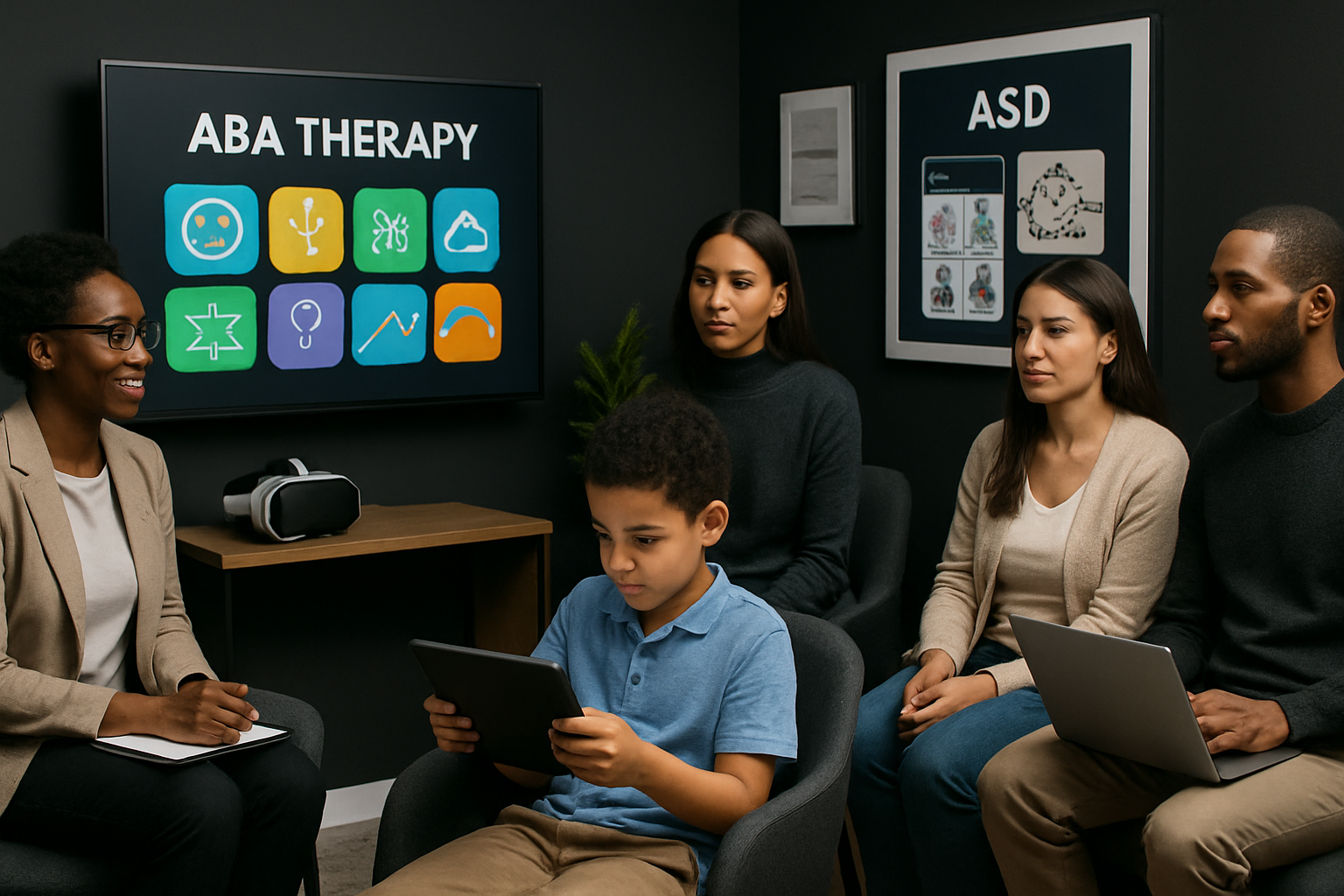
TECHNOLOGY INTEGRATION IN ABA
Technology is transforming Applied Behavior Analysis (ABA) for ASD by expanding access and improving therapy quality. Telehealth enables families in remote areas to connect with Board Certified Behavior Analysts (BCBAs) for virtual consultations and supervision, ensuring consistent therapy even when in-person sessions aren’t possible.
Digital data collection tools are now standard, offering real-time progress tracking and instant feedback for therapists and families. Many providers use specialized software to analyze trends and adjust interventions quickly.
Virtual reality (VR) is another breakthrough. VR creates immersive scenarios for practicing social skills or navigating challenging situations. These experiences help children with ASD generalize skills learned in therapy to real-world environments. By integrating these technologies, ABA becomes more adaptive, engaging, and effective for learners of all ages.
Enhanced Customization and Precision
Personalization is at the core of ABA advancements in 2025. AI-driven assessment tools analyze large data sets to design highly individualized treatment plans. These systems can predict which interventions will be most effective for a specific child, saving valuable time and resources.
Culturally responsive ABA is also on the rise, ensuring interventions respect each family’s background and values. Reports show a 40% increase in culturally adapted ABA programs (Autism Research Review, 2024), highlighting the push for inclusivity.
For more insights into how artificial intelligence is shaping therapy, explore AI-Augmented Behavior Analysis for Children with Developmental Disabilities. These innovations are setting new standards for precision and equity in ABA.
Collaboration with Other Disciplines
Modern ABA therapy is rarely delivered in isolation. Interdisciplinary collaboration is now standard practice, integrating ABA with speech, occupational, and physical therapies. This team-based approach ensures holistic care and addresses the full range of challenges faced by individuals with ASD.
For example, a child may work on communication goals with a speech therapist while practicing social skills with their ABA team. Occupational therapists may assist with sensory regulation, while BCBAs monitor behavioral progress.
This coordinated care model leads to stronger outcomes, as each discipline contributes its expertise. By breaking down silos, ABA supports comprehensive growth and long-term success.
Addressing Criticisms and Ethical Considerations
As ABA therapy evolves, there is a renewed focus on ethics and individual well-being. Critics have raised concerns about therapy intensity and the importance of respecting children’s autonomy. In response, modern ABA emphasizes assent, choice, and dignity in every session.
Therapists now prioritize the child’s voice, offering choices in activities and encouraging self-advocacy. Interventions are designed to be as least intrusive as possible, ensuring support feels empowering rather than overwhelming.
Ongoing professional development in ethics keeps providers aligned with best practices. This commitment to ethical care ensures ABA continues to empower individuals while honoring their rights and preferences.
CHOOSING THE RIGHT ABA PROVIDER AND MAXIMIZING OUTCOMES
Selecting the right provider for ABA therapy is a critical step for families seeking meaningful progress. With many options available, it’s important to focus on providers with strong credentials, individualized care, and transparent communication.
High-quality providers involve families in the process, offer regular updates, and adjust plans as children grow. A collaborative, culturally responsive approach ensures ABA therapy delivers measurable outcomes and long-term success.
WHAT TO LOOK FOR IN AN ABA PROVIDER
When considering Applied Behavior Analysis (ABA) for ASD, focus on providers with strong credentials and a commitment to individualized care. Look for Board Certified Behavior Analysts (BCBAs), proper licensure, and proven experience working with autism spectrum disorder.
Here’s a quick comparison table to guide your search:
| Qualification | Why It Matters |
|---|---|
| BCBA/BCaBA certification | Ensures expertise in ABA |
| State licensure | Legal compliance |
| Family involvement | Supports skill generalization |
| Transparent reporting | Tracks real progress |
| Cultural responsiveness | Respects family backgrounds |
QUESTIONS TO ASK POTENTIAL PROVIDERS
Interviewing ABA providers is a vital step in selecting the right fit for your family. Preparing targeted questions ensures the provider aligns with your child’s needs, values, and long-term goals.
- How do you address cultural sensitivity and language needs?
- What methods do you use to set and measure goals for Applied Behavior Analysis (ASD)?
- How are parents and caregivers involved in the therapy process?
- What types of training or support do you offer families?
- Can you share examples of adapting interventions for different learning styles?
It’s also important to ask about their approach to communication, especially if your child uses alternative or augmentative communication methods.
MAXIMIZING THERAPY BENEFITS
Consistent, coordinated care is essential for ABA therapy to deliver its best results. Collaboration between home, school, and therapy settings accelerates progress—studies show that children receiving coordinated care demonstrate 30% faster improvement.
Regular feedback sessions with your team help maintain alignment and motivation. Many providers now use innovative tools, such as digital progress trackers and gamified frameworks, to make sessions engaging and effective.
For practical strategies on building social skills at home, explore Nurturing Social Skills in ASD, which offers actionable tips aligned with ABA principles.
NAVIGATING INSURANCE AND FUNDING OPTIONS
Understanding insurance coverage for ABA therapy can feel overwhelming, but it’s essential. Most states mandate coverage, though specifics vary. Contact your provider to clarify what’s included and ask about potential out-of-pocket costs.
Tips for families:
- Gather all documentation: diagnosis, recommendations, prior assessments
- Advocate for your child by appealing denied claims if needed
- Explore grants, Medicaid waivers, and local funding options for additional support
Being proactive and informed helps secure the best resources for your child’s ABA program.
REAL-LIFE SUCCESS STORIES AND OUTCOMES OF ABA FOR ASD
Every ABA journey is unique, yet countless families share inspiring stories of growth and transformation. ABA therapy continues to demonstrate measurable, life-changing results across all ages.
Case Studies Demonstrating ABA Impact
- Early intervention: A preschooler who was nonverbal began using picture cards to request snacks within six months of ABA. By age five, they formed simple sentences.
- School-aged child: Through social skills groups, one student learned to initiate conversations and participate in class, dramatically improving peer relationships.
- Teenager: With targeted life skills training, a teen with ASD mastered public transportation and self-care, increasing independence.
These examples highlight ABA’s flexibility, adapting to each individual’s needs and strengths.
Family and Caregiver Perspectives For many families, ABA therapy is more than treatment—it’s a lifeline. Parents often report reduced stress and improved daily routines as their children gain communication and self-regulation skills.
- “We finally have meaningful conversations,” shares one parent.
- Another family emphasizes the value of home-based ABA: “Consistency at home helped our child generalize new behaviors.”
Caregivers appreciate the collaborative goal-setting process, which ensures interventions align with family values. ABA’s focus on partnership empowers caregivers, making them active participants in their loved one’s progress.
LONG-TERM OUTCOMES AND RESEARCH FINDINGS
Research consistently confirms ABA’s effectiveness in promoting lasting improvements. Studies show that 48% of children receiving intensive ABA achieve mainstream classroom placement—a remarkable outcome supported by decades of evidence.
Recent innovations, such as Explainable AI for Quantifying Behaviors in ASD, enable objective tracking of progress in real-world classrooms. This technology helps providers and families make informed decisions, further enhancing long-term outcomes.
ABA’s measurable results extend to adaptive functioning, communication, and daily living skills, supporting individuals well beyond childhood.
| Outcome | ABA-Related Improvement |
|---|---|
| Communication | Functional speech, AAC use |
| Social Skills | Peer interaction, teamwork |
| Independence | Self-care, travel skills |
ADDRESSING INDIVIDUAL VARIABILITY
No two journeys with Applied Behavior Analysis (ABA) for ASD are identical. Outcomes depend on factors such as age at intervention, therapy intensity, and family involvement.
- Early starters often show the fastest progress
- High-intensity programs (20+ hours per week) are linked to greater gains
- Tailored approaches work best for minimally verbal children or those with co-occurring needs
Therapists continually adapt ABA plans, ensuring each individual receives support that matches their strengths, challenges, and long-term goals.
COMMUNITY INTEGRATION AND SOCIAL INCLUSION
A core mission of ABA therapy for ASD is fostering meaningful participation in schools and communities. Many children who receive ABA join extracurricular clubs, sports, and even part-time jobs.
- ABA helps build friendship skills, confidence, and resilience
- Families celebrate milestones such as birthday parties and school plays, once sources of stress
- Community partners—including coaches and teachers—collaborate with ABA teams to promote inclusion
These real-life successes demonstrate how ABA opens doors, enabling individuals with ASD to thrive alongside their peers.
If you’re ready to see how personalized ABA therapy can make a real difference for your loved one, you’re not alone. Every journey with ASD is unique, and finding the right support matters. At Silveira Behavior Consultants, we’re here to guide you—whether you need help with school readiness, building social skills, or simply exploring the next step. If you have questions or want to discuss your options, don’t hesitate to Inquire About Services. We’re here to help you get started with confidence.